Beyond Chatbots and Automation
When most people think about AI in HR, they think about chatbots answering benefits questions or algorithms screening resumes. These applications exist, but they represent the shallow end of what AI can do for employee experience management.
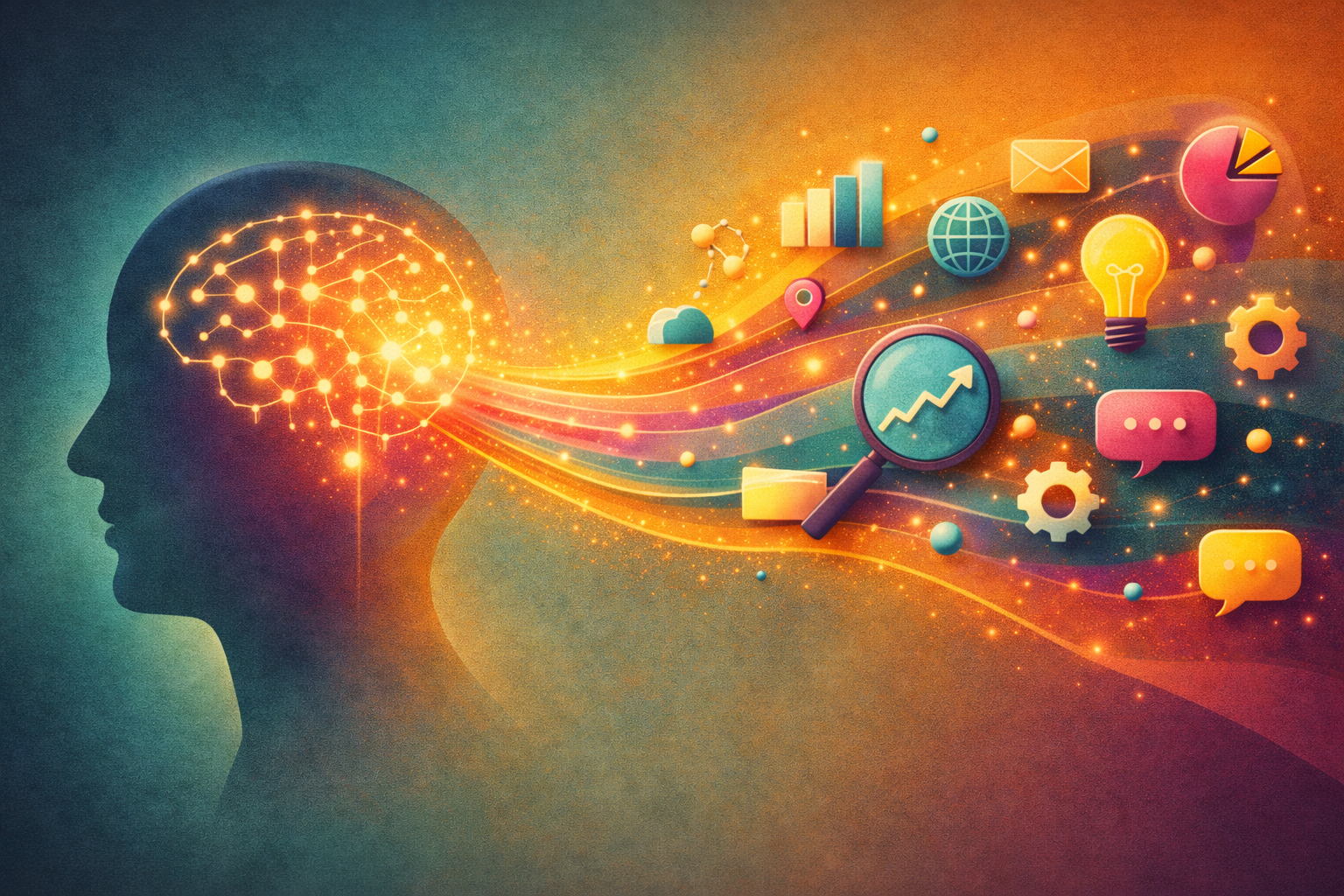
The deeper transformation is happening in how organizations understand their workforce. AI is enabling a shift from periodic, survey-based snapshots to continuous, multi-dimensional intelligence about how employees experience work — in real time, at scale, with nuance that was previously impossible.
Three Ways AI Is Changing the Game
1. Natural Language Understanding at Scale
The most valuable employee data is often unstructured: open-ended survey comments, performance review narratives, Slack messages, exit interview transcripts, Glassdoor reviews. This data is rich with insight but historically impossible to analyze at scale.
Modern NLP models can process tens of thousands of text responses and extract themes, sentiment, urgency, and even emotional undertones with remarkable accuracy. Organizations that combine NLP-based analysis of unstructured feedback with traditional survey data are able to identify emerging workforce issues significantly earlier — continuous listening surfaces signals before periodic surveys can.
This isn’t keyword counting. Advanced models understand context, sarcasm, and nuance. They can distinguish between an employee who says “I love my manager” genuinely and one who uses the same words ironically in the context of a complaint.
2. Predictive Workforce Analytics
Traditional analytics tells you what happened. AI-powered predictive models tell you what’s likely to happen next — and what you can do about it.
Retention prediction. By analyzing patterns across engagement data, performance trends, compensation history, learning activity, manager relationships, and career progression, AI models can identify employees at elevated risk of departure months before they start interviewing. The best models achieve 70-80% accuracy, giving organizations a meaningful intervention window.
Burnout detection. AI can identify burnout risk by analyzing behavioral signals: increasing after-hours work, declining collaboration, shorter response times in communications (paradoxically, burned-out employees often respond faster because they’re in reactive mode), and decreased participation in optional activities.
Performance trajectory. Rather than relying on annual performance reviews, AI can track leading indicators of performance change — shifts in output quality, collaboration patterns, learning engagement — and flag both potential stars and employees who may need support.
3. Personalized Experience Design
AI enables organizations to move from one-size-fits-all employee programs to personalized experiences at scale.
A new hire in their first week needs different support than a five-year veteran considering a career change. A remote worker in a different time zone has different needs than a co-located team member. A working parent has different flexibility needs than a recent graduate.
AI-driven personalization means matching the right resources, communications, and development opportunities to each employee based on their role, tenure, working patterns, expressed preferences, and demonstrated needs. Not surveillance — service. The distinction matters.
Real Applications, Not Hype
Intelligent Onboarding
Traditional onboarding is a linear process: Day 1 orientation, Week 1 training, Month 1 check-in. AI-enabled onboarding adapts to each new hire’s pace, learning style, and role requirements. It identifies when someone is struggling (reduced system usage, limited colleague interaction, delayed task completion) and triggers proactive support before the new hire disengages.
Research from the Josh Bersin Company consistently shows that organizations with mature onboarding practices — those that adapt to individual pace and role requirements rather than following a fixed schedule — significantly outperform peers on both time-to-productivity and 12-month retention.
Real-Time Culture Monitoring
Culture used to be assessed annually, if at all. AI enables continuous culture monitoring by analyzing communication patterns, collaboration networks, recognition frequency, meeting dynamics, and employee feedback channels. This creates a real-time dashboard of cultural health that leaders can use to identify emerging issues before they become crises.
For instance, an AI system might detect that cross-functional collaboration between engineering and product has declined 40% over the past quarter, coinciding with organizational changes. This early warning allows leadership to intervene before the collaboration breakdown affects product quality.
Smart Benefits Optimization
Most employees use only a fraction of their available benefits — not because the benefits aren’t valuable, but because they don’t know they exist or don’t understand how they apply. AI-powered benefits platforms analyze each employee’s situation and proactively recommend relevant resources.
An employee who just had a baby might receive information about parental leave policies, childcare benefits, and flexible work options. An employee approaching 50 might see retirement planning resources and health screening reminders. The system matches resources to life events, health needs, and expressed interests.
The Ethics of AI in Employee Experience
AI in the workforce raises legitimate ethical concerns that responsible organizations must address:
Transparency. Employees should know what data is being collected, how it’s analyzed, and what decisions it informs. Black-box algorithms that affect people’s careers are unacceptable.
Consent. Passive data collection must be consent-based and aggregated. Individual-level behavioral monitoring crosses the line from intelligence to surveillance.
Bias. AI models trained on historical data can perpetuate and amplify existing biases. Regular bias audits are essential, particularly for models that influence hiring, promotion, or performance assessment.
Human oversight. AI should inform human decisions, not replace them. A predictive model might flag a retention risk, but a human manager should determine the appropriate response based on relationship context that no algorithm can fully capture.
What Workforce Intelligence Means for AI Adoption
AI’s impact on employee experience is limited by the data infrastructure underneath it. The most sophisticated NLP model is useless if employee feedback is trapped in disconnected systems. The best predictive model fails if it can only access data from one source.
This is why the intelligence layer concept matters: AI requires unified, clean, connected data to deliver real value. Organizations that invest in data infrastructure first will get exponentially more value from AI than those that bolt AI tools onto fragmented data.
Getting Started
If you’re exploring AI for employee experience, start here:
- Audit your data readiness. AI is only as good as the data it’s built on. Is your workforce data unified, clean, and accessible?
- Start with low-risk, high-value use cases. NLP-based analysis of existing survey comments is a safe starting point with immediate value.
- Establish ethical guardrails. Define your principles for AI use in workforce contexts before deploying any tools.
- Focus on augmentation, not replacement. The goal is to make HR professionals and managers more effective, not to automate away human judgment.
Workbliss is building AI-native workforce intelligence — designed from the ground up to transform how organizations understand and improve the employee experience. Join the waitlist to learn more.